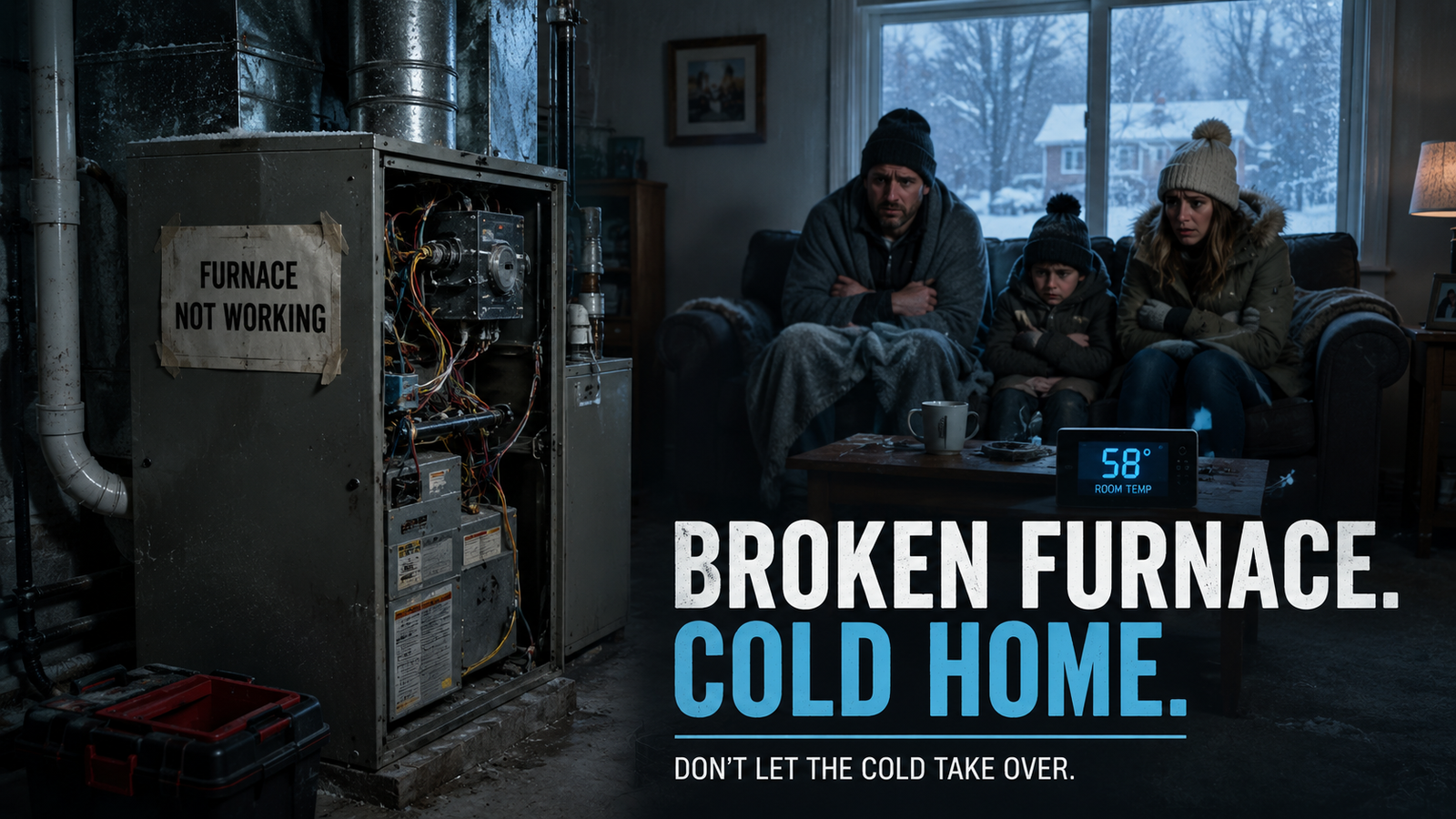
Your furnace rarely fails without warning.
Most homeowners just don't know what to look for and by the time they notice something is seriously wrong, it's midnight in January and the temperature inside the house is
dropping fast.
The truth is, a furnace that's on its way out almost always sends signals weeks or even months before it quits completely. Unusual sounds, higher energy bills, uneven heating,
strange smell each one is your heating system telling you something isn't right.
In this guide, we'll walk you through 9 of the most common warning signs that your furnace is going out, what each one usually means, and when you need to call a professional
before a small problem turns into a costly emergency.
Because in the middle of a cold winter, the best furnace repair call you'll ever make is the one you make before you actually need it.
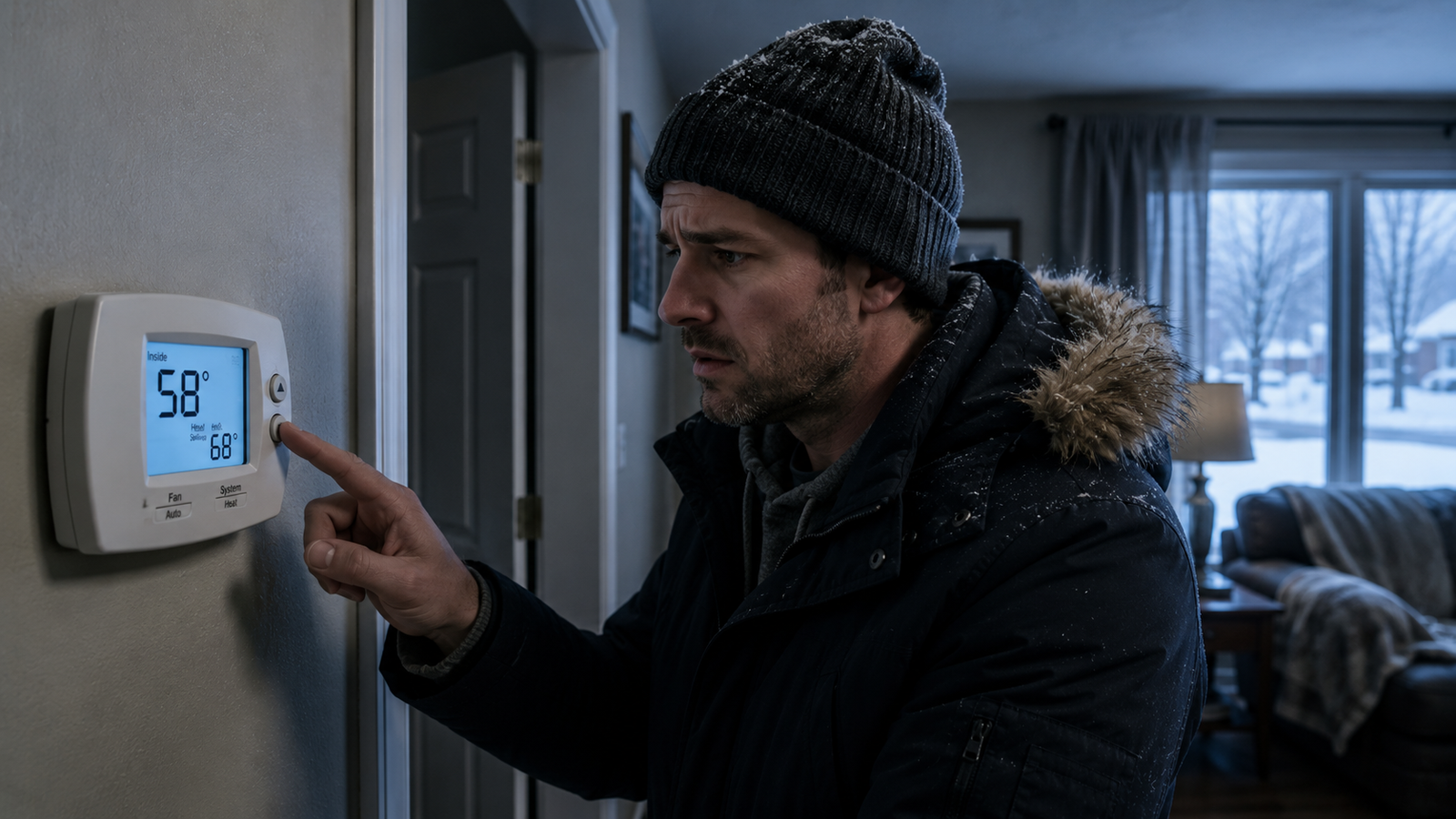
Why Catching These Signs Early Matters?
A furnace doesn't just stop working one day for no reason. The components that fail igniters, heat exchangers, blower motors, flame sensors all degrade gradually over time. The warning signs they produce are your window to act before the situation becomes an emergency.
Catching these signs early means:
→ Repair instead of replacement - a $200 igniter fix ignored for two months can become a $2,000 heat exchanger replacement.
→ Scheduling on your terms - not at midnight when every HVAC company has a 3-day waitlist.
→ Safety - some furnace warning signs, particularly those involving gas and carbon monoxide, are life-safety issues that can't wait.
With that in mind, here are the 9 warning signs you should never ignore when it comes to your furnace.
1. Your Furnace Is Making Unusual Noises:
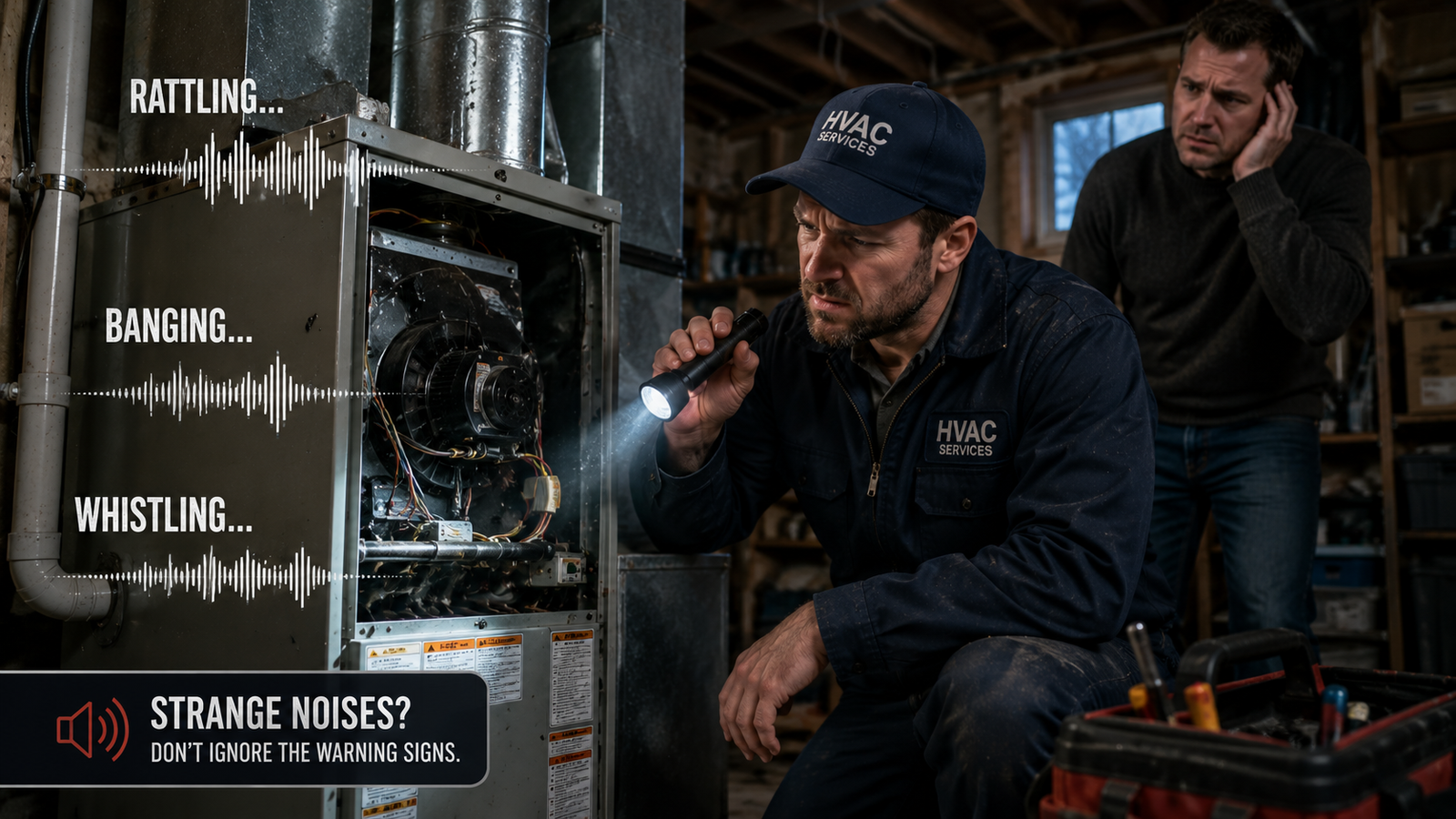
A healthy furnace runs with a consistent, low hum. The moment you start hearing sounds that weren't there before — banging, rattling, squealing, or grinding — your furnace is telling you something specific.
Here's what different sounds usually mean:
Banging or popping at startup:
This is one of the most common furnace sounds homeowners report and one of the most misunderstood.
A loud bang when your furnace first fires up is almost always caused by delayed ignition. Gas builds up in the combustion chamber before igniting all at once, creating a small but forceful explosion. Over time, this puts serious stress on the heat exchanger which can lead to cracks and carbon monoxide leaks. Don't dismiss this sound as "normal." It isn't.
Rattling during operation:
Loose panels, unsecured ductwork, or a failing motor mount. Usually not an immediate emergency, but worth investigating rattling components can cause additional damage if left unchecked.
Squealing or screeching:
Almost always a blower motor issue worn bearings, a slipping belt, or a motor that's beginning to fail. The squeal will get louder and more frequent until the motor gives out completely.
Grinding:
This is the sound of metal on metal typically a blower wheel that has come loose and is scraping against the housing. If you hear grinding, shut your furnace off immediately
and call a technician. Running it further will cause significantly more damage.
2. Your Energy Bills Are Climbing Without Explanation
If your heating bills are noticeably higher than they were the same time last year and your usage habits haven't changed your furnace is working harder than it should be
to produce the same amount of heat.
This happens for several reasons:
Dirty burners or heat exchanger:
A furnace that can't combust fuel efficiently uses more of it to reach your set temperature. Dirty burners and a partially blocked heat exchanger are two of the most common causes of efficiency loss.
Failing blower motor:
A motor that's wearing out draws more electrical current to maintain speed showing up as a higher electricity bill even when you haven't changed how you heat your home.
Age-related efficiency loss:
As furnace components wear, overall system efficiency drops. A furnace that was rated at 80% AFUE when new may be operating at 65-70% efficiency after 15 years burning
significantly more fuel for the same heat output.
A rise of 15-25% in heating costs with no clear external explanation is worth investigating. What looks like a billing issue is often a furnace issue in disguise.
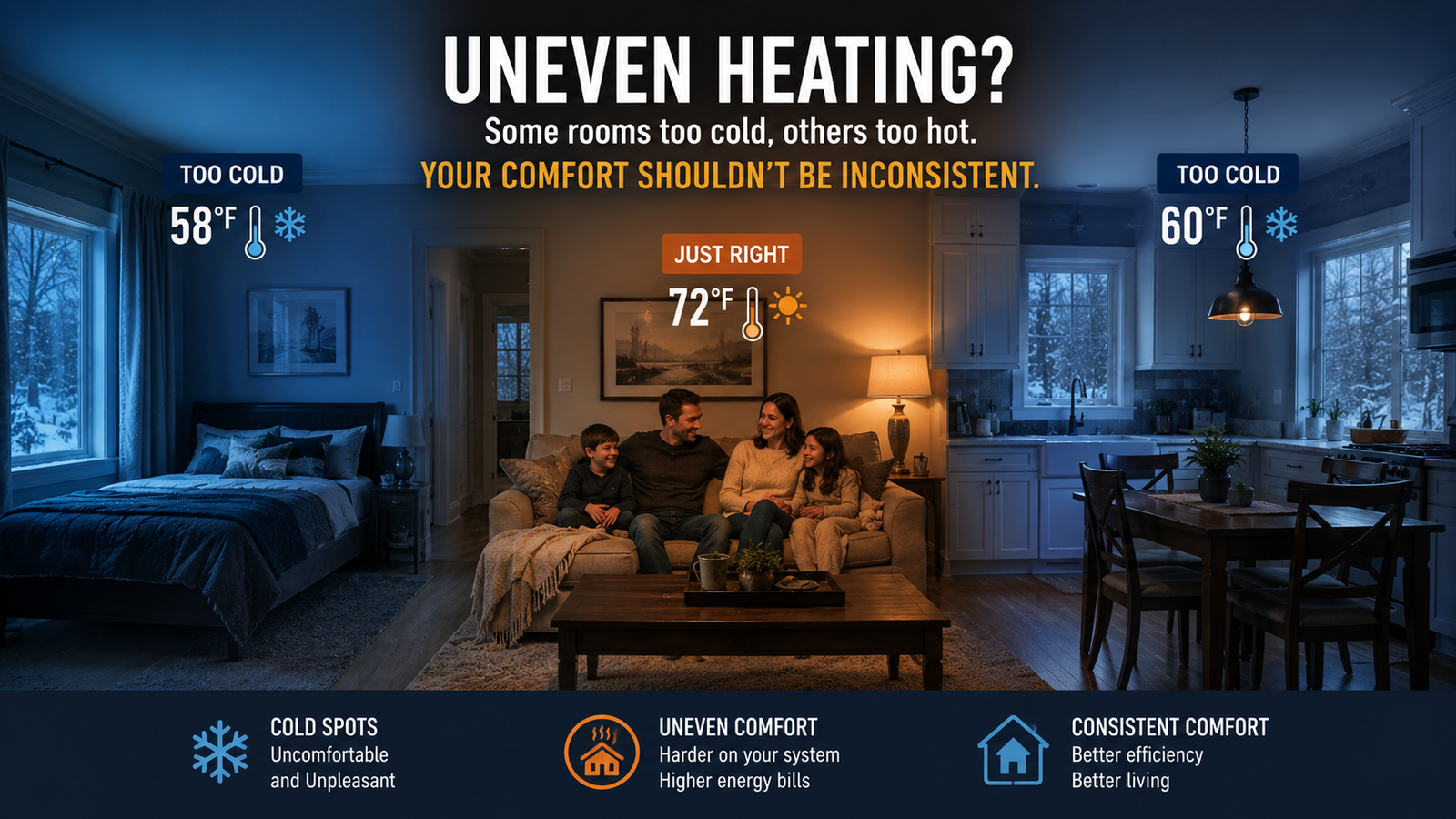
3. Uneven Heating - Some Rooms Stay Cold
Walk through your home on a cold day. If some rooms are comfortably warm and others never quite get there that pattern matters.
A properly functioning furnace heats a home evenly. When it starts to fail, you'll often notice the rooms farthest from the furnace or at the end of the duct runs getting noticeably less heat than rooms closer to the unit.
This can point to several issues:
A weakening blower motor that can no longer push heated air all the way through the duct system. A partially failing heat exchanger that's reducing heat output below the level needed to warm the full square footage of your home.
A clogged air filter that's restricting airflow check this first, it's a quick and free fix.
Ductwork issues leaks or blockages in the duct system can mimic furnace problems.
The key is to distinguish between a duct problem and a furnace problem something a technician can determine quickly on inspection.
4. Your Furnace Is Short Cycling
Short cycling is when your furnace turns on, runs for a short period sometimes as little as 2-3 minutes then shuts off before reaching the temperature your thermostat is set to. Then it starts again. And again. And again.
This on-off-on-off pattern is one of the clearest signs that something is wrong.
Short cycling causes include:
Overheating: The most common cause. A dirty air filter, blocked vents, or restricted airflow causes the furnace to overheat triggering the high-limit switch, which shuts
the system down as a safety measure. The furnace cools briefly, restarts, overheats again.
A failing flame sensor: The sensor that confirms combustion is happening gets dirty or corroded, causing the system to shut down seconds after ignition even when the furnace
is working correctly.
An oversized furnace: A furnace that's too large for the space heats the area too quickly, triggering an early shutdown before the home has actually reached an even temperature. Short cycling is hard on every furnace component it accelerates wear and significantly shortens system life. If your furnace is short cycling, it's not a problem you can afford to defer.
5. You Notice a Yellow or Flickering Burner Flame
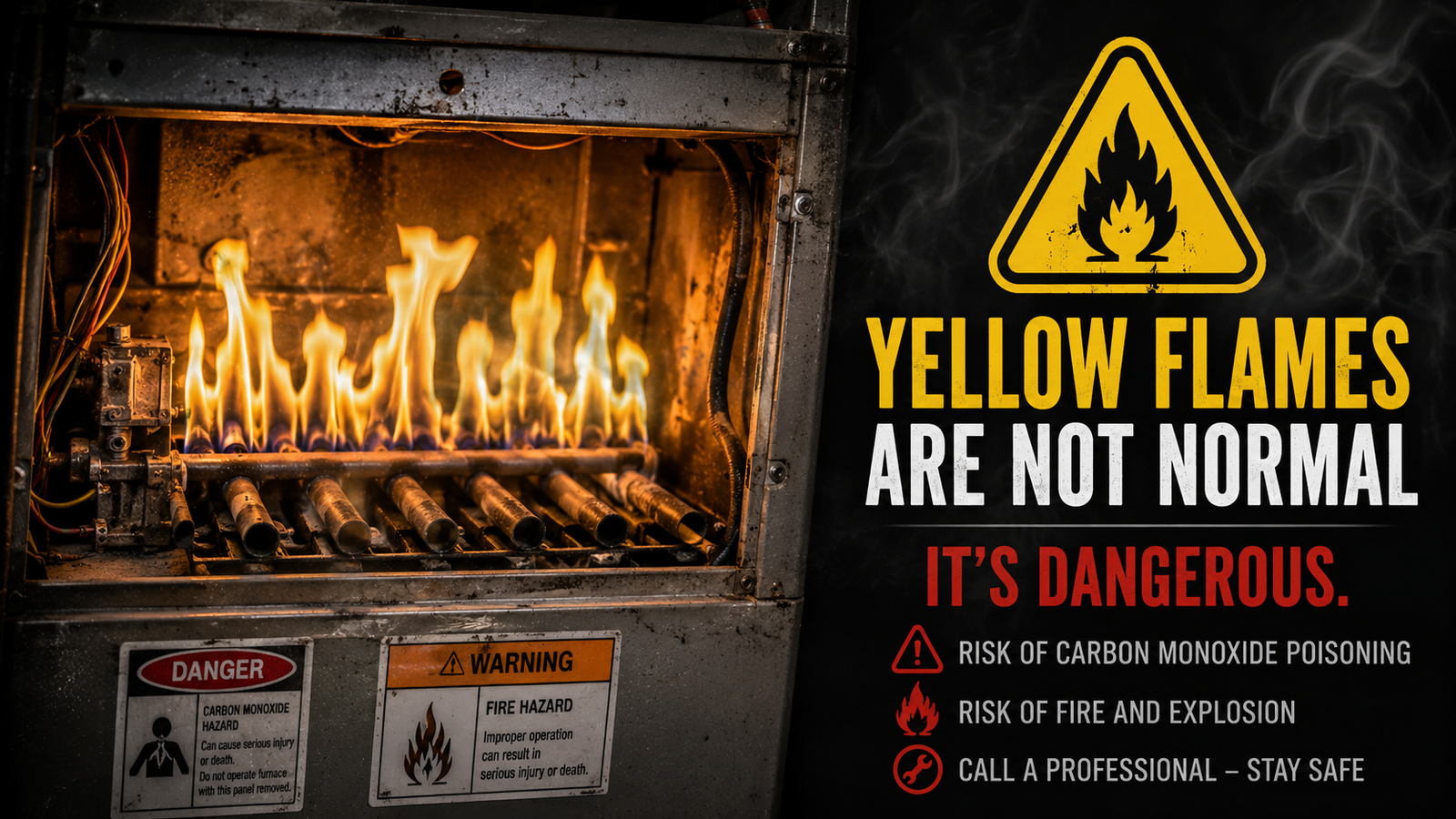
This one matters more than almost anything else on this list because it's a direct safety signal. A properly burning gas furnace produces a steady, blue flame. Blue means complete combustion the gas is burning fully and efficiently.
A yellow, orange, or flickering flame means something different entirely. It means the gas is not burning completely incomplete combustion which produces carbon monoxide as a byproduct.
Carbon monoxide is colorless, odorless, and potentially fatal. A cracked heat exchanger one of the most serious furnace problems is often what allows combustion gases to escape, and a yellow flame is frequently the first visible sign.
If you look through your furnace's inspection window and see anything other than a steady blue flame, shut the furnace off immediately and call a technician. Do not restart it until it has been professionally inspected.
6. You Smell Something Unusual Near Your Furnace
Your nose is one of your most reliable furnace diagnostic tools if you know what different smells mean.
Burning dust at season start:
When a furnace fires up for the first time in fall after months of inactivity, a brief burning dust smell is normal dust that settled on heat exchangers and burners over summer burning off. This should clear within 30-60 minutes. If it doesn't, call a technician.
Metallic or electrical burning smell:
This is not normal at any point in the season. A hot, metallic, or burning plastic smell during furnace operation usually indicates an electrical component that's overheating a motor, a control board, or wiring insulation. Shut the furnace off and call for service immediately.
Rotten egg smell:
This is the smell of a gas leak. Natural gas is odorless by itself utility companies add mercaptan to give it that distinctive sulfur smell precisely so you can detect leaks. If you smell rotten eggs near your furnace, do not touch any switches or electrical devices, leave the house immediately, and call your gas company from outside. Then call a furnace technician.
Musty or mold smell from vents:
Often a ductwork issue rather than a furnace problem, but worth mentioning mold in the duct system can distribute through your entire home every time the furnace runs.
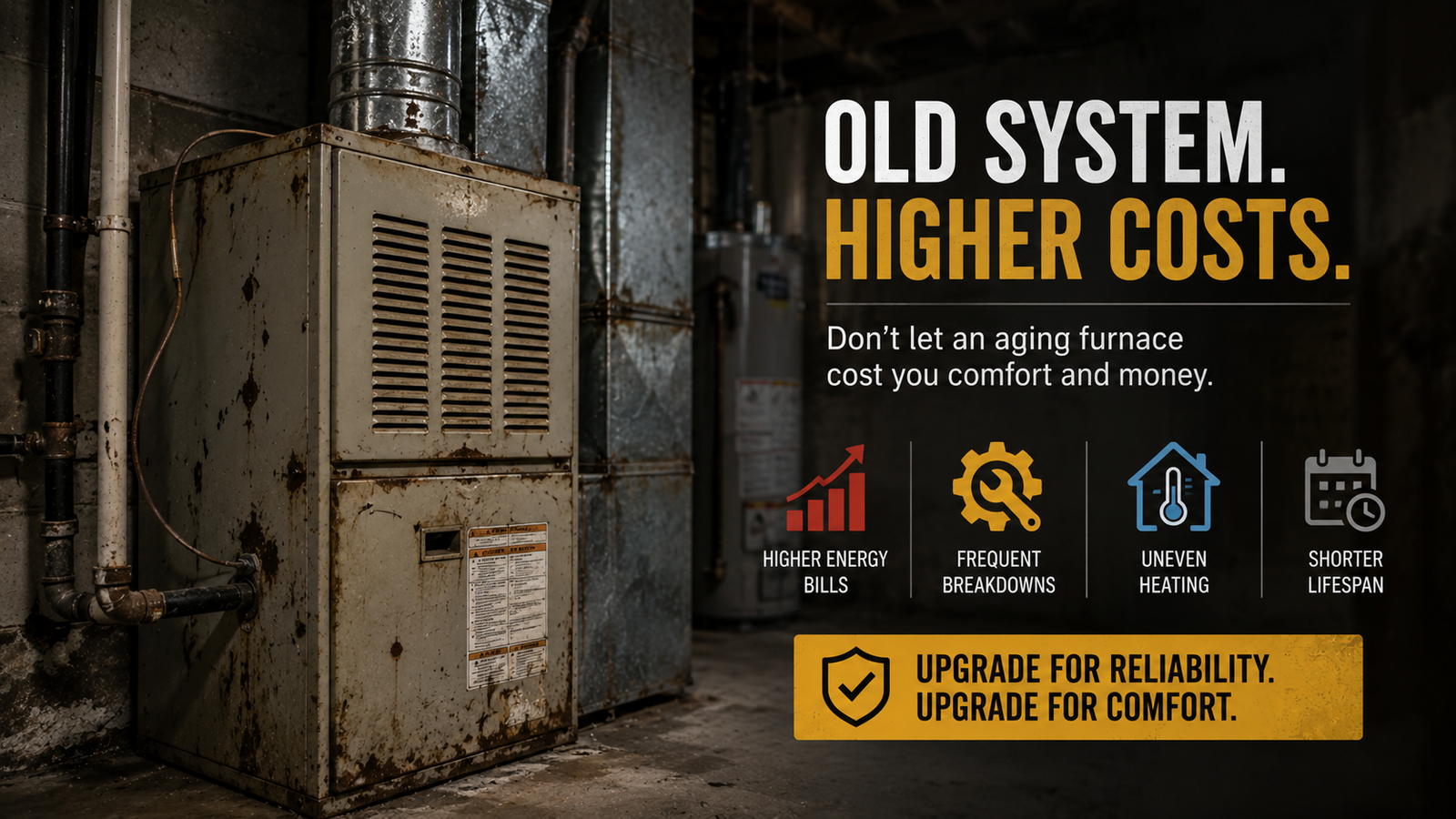
7. Your Furnace Is Over 15 Years Old
Age alone isn't a reason to replace a furnace but age combined with any of the other signs on this list is a very different story.
The average gas furnace lasts 15-20 years with regular maintenance. Electric furnaces can run 20-30 years. Once a furnace crosses the 15-year mark, the calculus around repair
versus replacement starts to shift.
Here's why age matters:
Components become harder to source as furnace models age out. A repair that takes one visit on a modern furnace might take two weeks and a specialist part order on a
15 year old unit.
Efficiency drops. A furnace that was 80% AFUE when new is likely operating at significantly lower efficiency after 15 years of thermal cycling, dust accumulation, and component wear. Reliability becomes unpredictable. One major repair often signals that other components are at similar end-of-life stage. Fixing one thing doesn't reset the clock on everything else.
The 50% rule is a useful guideline:
if a repair costs more than 50% of what a new furnace would cost, and your current unit is over 12-15 years old, replacement is almost always the better long-term investment.
8. Your Carbon Monoxide Detector Is Going Off
This is not a warning sign this is an emergency.
Carbon monoxide detectors are specifically designed to alert you to the presence of a gas that you cannot otherwise detect. If your CO detector goes off when your furnace is running, treat it as a life-safety emergency without exception.
What to do immediately:
→ Get everyone out of the house, people and pets.
→ Do not stop to grab belongings.
→ Do not use any light switches, phones, or electrical devices inside the house.
→ Call emergency services from outside or a neighbor's home.
→ Do not re-enter the building until it has been cleared by emergency responders.
→ After the all-clear, call a furnace technician before restarting your heating system.
A cracked heat exchanger is the most common furnace-related cause of carbon monoxide in a home. It is not a repair you can defer and it is not something a visual inspection alone can always catch. A qualified technician uses specialized equipment to test for CO and inspect heat exchanger integrity.
Install CO detectors on every floor of your home and within 15 feet of every sleeping area. Test them monthly. Replace them every 5-7 years.
9. Your Furnace Needs Frequent Repairs
One repair in a season is bad luck. Two repairs in a season is a pattern. Three or more repairs in a single heating season is your furnace telling you it's done.
When a furnace reaches end-of-life, it rarely fails in one dramatic moment. More often, it starts requiring repair after repair each one technically fixing the immediate problem while other components continue to degrade.
If you've called for furnace repair more than twice in the past 12 months, ask your technician for an honest assessment of the full system not just the component that failed most recently.
A good technician will tell you if you're spending repair money on a furnace that's already past its economic life. A great technician will show you the numbers repair costs versus replacement cost versus energy savings and let you make an informed decision.
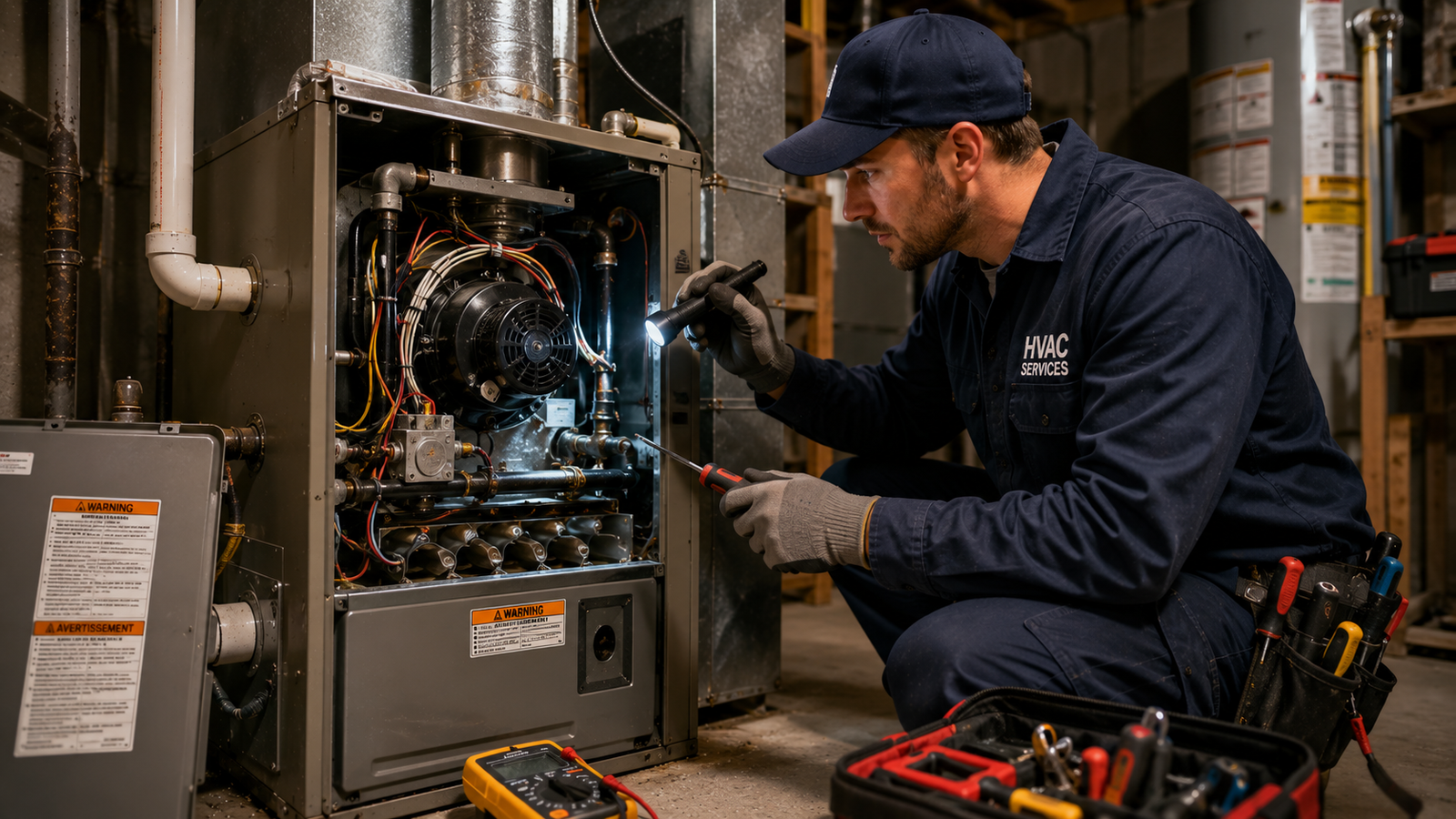
What to Do If You Notice These Signs?
If you've recognized one or more of these warning signs in your own furnace, here's the honest advice from our technicians:
Don't wait. Every one of these signs gets more expensive the longer it's ignored. The $150 flame sensor cleaning you defer in October often becomes the $800 emergency repair call in December.
Don't self-diagnose beyond the basics. Checking your air filter and thermostat settings is something any homeowner can do. But gas connections, electrical components, heat exchangers, and combustion systems require a licensed technician with proper diagnostic equipment.
Don't let cost pressure you into inaction. A furnace that's showing signs of failure in a cold climate isn't just a financial issue it's a comfort and safety issue. Get a written estimate first and make an informed decision from there.
Get a second opinion on major repairs. If a technician recommends a repair over $500, there's nothing wrong with getting a second quote especially on older systems where the repair-versus-replace question is genuinely close.
When Is It Repair vs. Replacement?
This is the question every homeowner faces eventually and there's no universal answer. But here's the framework our technicians use:
Repair makes sense when:
→ The furnace is under 12-15 years old.
→ The repair cost is less than 50% of replacement cost.
→ The heat exchanger is intact.
→ This is the first or second significant repair on the unit.
Replacement makes more sense when:
→ The furnace is over 15-20 years old.
→ You've had multiple repairs in recent seasons.
→ The heat exchanger is cracked.
→ The repair cost exceeds 50% of a new unit.
→ Your energy bills have been climbing for years despite repairs.
The right answer depends on the specific age, condition, and repair history of your system. An honest technician will give you both options with real numbers and let you decide.
Summary - 9 Signs Your Furnace Is Going Out
Quick reference for everything we covered:
1. Unusual noises - banging, rattling, squealing, grinding.
2. Rising energy bills without explanation.
3. Uneven heating across rooms in your home.
4. Short cycling - frequent on-off without reaching set temperature.
5. Yellow or flickering burner flame.
6. Unusual smells - electrical, gas, or persistent burning.
7. Furnace is over 15 years old and showing other symptoms.
8. Carbon monoxide detector is alarming - emergency
9. Frequent repairs - more than twice in one season.
Noticed Any of These Signs? Don't Wait to Find Out.
The worst time to diagnose a failing furnace is after it's already failed. If your furnace is showing any of the warning signs above, the smartest move is a professional inspection
before a developing problem becomes a midnight emergency.
Our certified furnace repair technicians are available for same-day diagnostics across Spokane and surrounding areas. We provide a written upfront estimate before any work begins no pressure, no surprises.
Furnace Acting Up?
Don't wait for a small problem to become a cold-night emergency. Call Furnace Repair Spokane for fast, certified service.
Call +1 (509) XXX-XXXX